
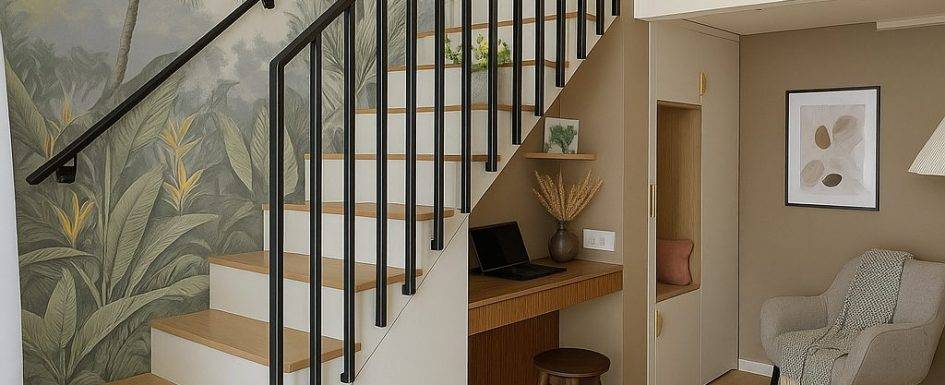
Welcome to Pétale de Carreaux, your dedicated resource for interior design, real estate, and renovation, managed by architects and fit-out professionals. Living in a small apartment and want to save space without sacrificing comfort or style? This article brings together ten interior designer tips to optimize every square foot, from the living room to the bedroom and the entryway.
Through smart furniture, well-thought-out lighting, integrated storage, and visual zoning, discover how to transform a restricted space into a fluid, functional, and harmonious interior. These tips are based on concrete experience from urban design projects: studios, one-bedroom apartments, or compact duplexes where every detail counts.
1. Understanding Space Before Acting: Diagnosis and Constraints
Before any renovation, an interior designer begins with a complete diagnosis of the space. It’s not just about measuring, but understanding how the home “breathes.” Every nook and cranny matters. The survey always starts on paper: this manual work remains irreplaceable for perceiving volumes, angles, and natural light. Only then is the space transcribed into a digital model, allowing for the testing of different layout hypotheses before final design.
📐 Professional Tip: Always start by observing light and traffic flow before thinking about furniture. These two elements determine the true comfort of a small space.
This precise look often leads to unexpected gains. For example, removing a simple technical casing can free up enough depth to integrate a full-height closet. Understanding before transforming is the first real space-saving measure.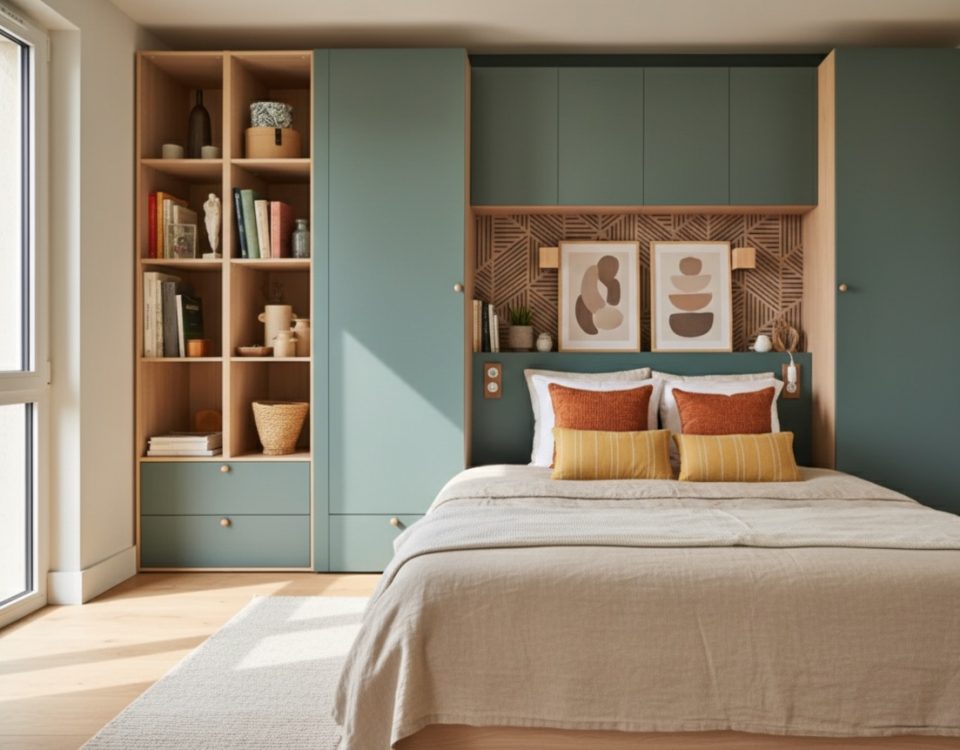
2. Working on Circulation: Fluidity and Passage Zones
Traffic flow determines the sensation of space, even without moving walls. A fluid, clear, and logical passage makes a small apartment immediately more pleasant to live in. A golden rule systematically applies: maintain at least 70 cm (28 inches) of width at chest level to allow an adult carrying a basket or object to pass. In highly constrained zones, 60 cm (24 inches) at the lower level may suffice if the visual field remains open.
💡 Architecture Hack: Visual axes are your allies. Align openings and light points to create a natural depth effect.
Simply repositioning a door or a piece of furniture can transform circulation and give new meaning to a space. These micro-adjustments, often invisible on a floor plan, make all the difference in volume perception.
3. Opting for Integrated and Discrete Storage
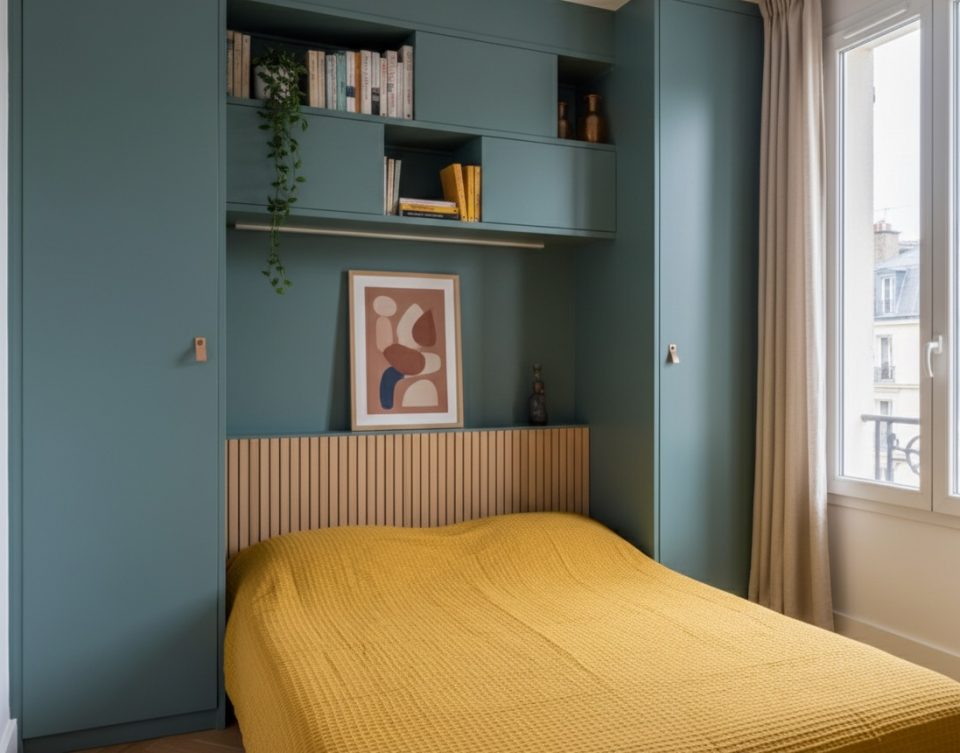
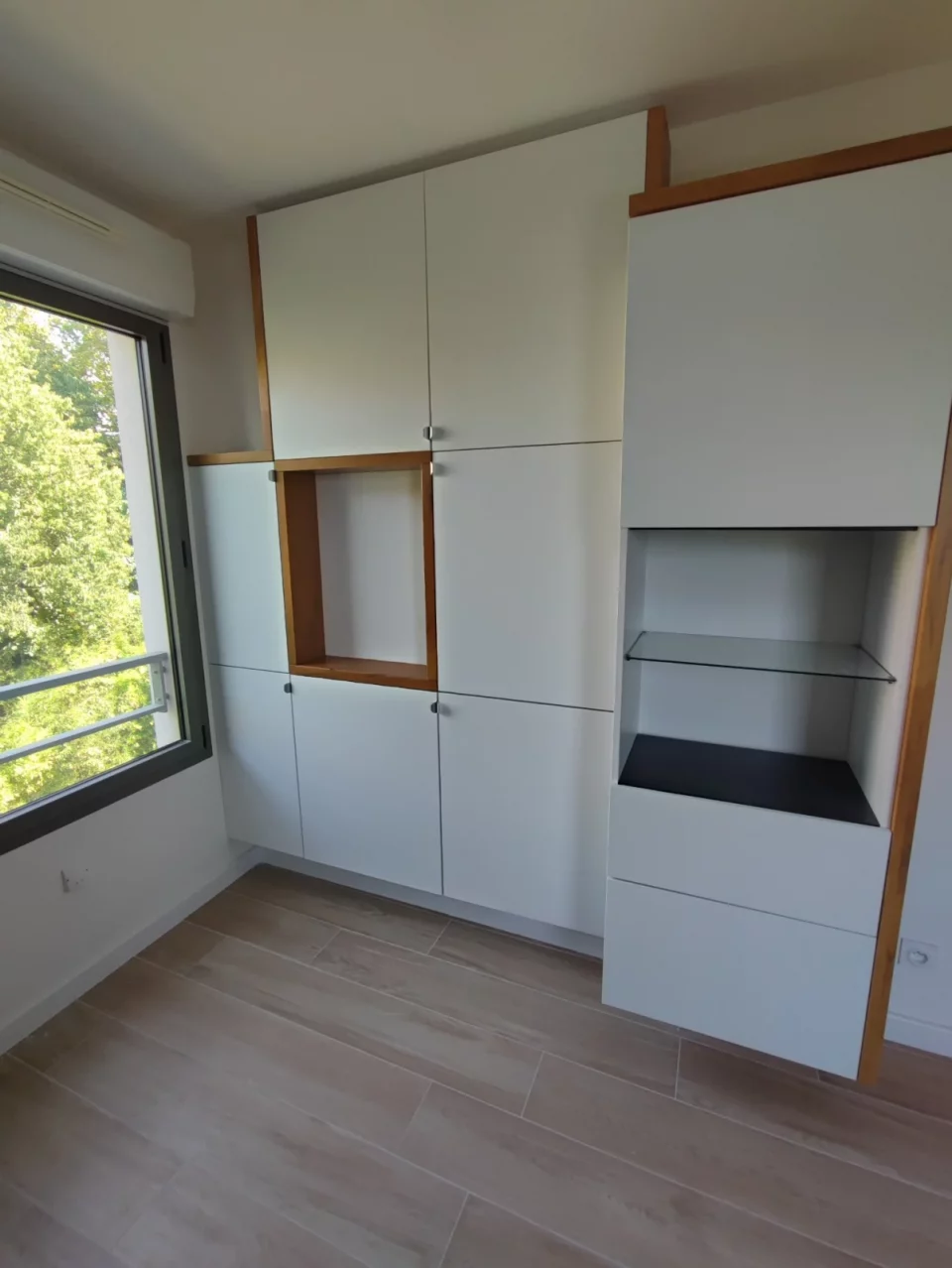
Well-designed storage is more than just furniture: it is an element of interior architecture. The difference between added storage and storage thought out in the initial plan lies in integration. Bespoke furniture is fixed, but its major asset is total optimization: depth, height, and width adapted to the nearest millimeter.
📐 Professional Tip: Integrated storage must be planned from the floor plan stage. By including it early in the design, you avoid wasted corners and maximize visual coherence.
A concrete example: a three-linear-meter hybrid unit combining a desk, a TV area, a closet, and entryway storage. It could be closed or open according to needs, creating a perfect balance between aesthetics and functionality. This type of design illustrates the philosophy of reasoned fit-out: making every centimeter an ally, especially by exploiting vertical height for invisible yet accessible storage.
4. Playing with Light and Materials to Visually Expand
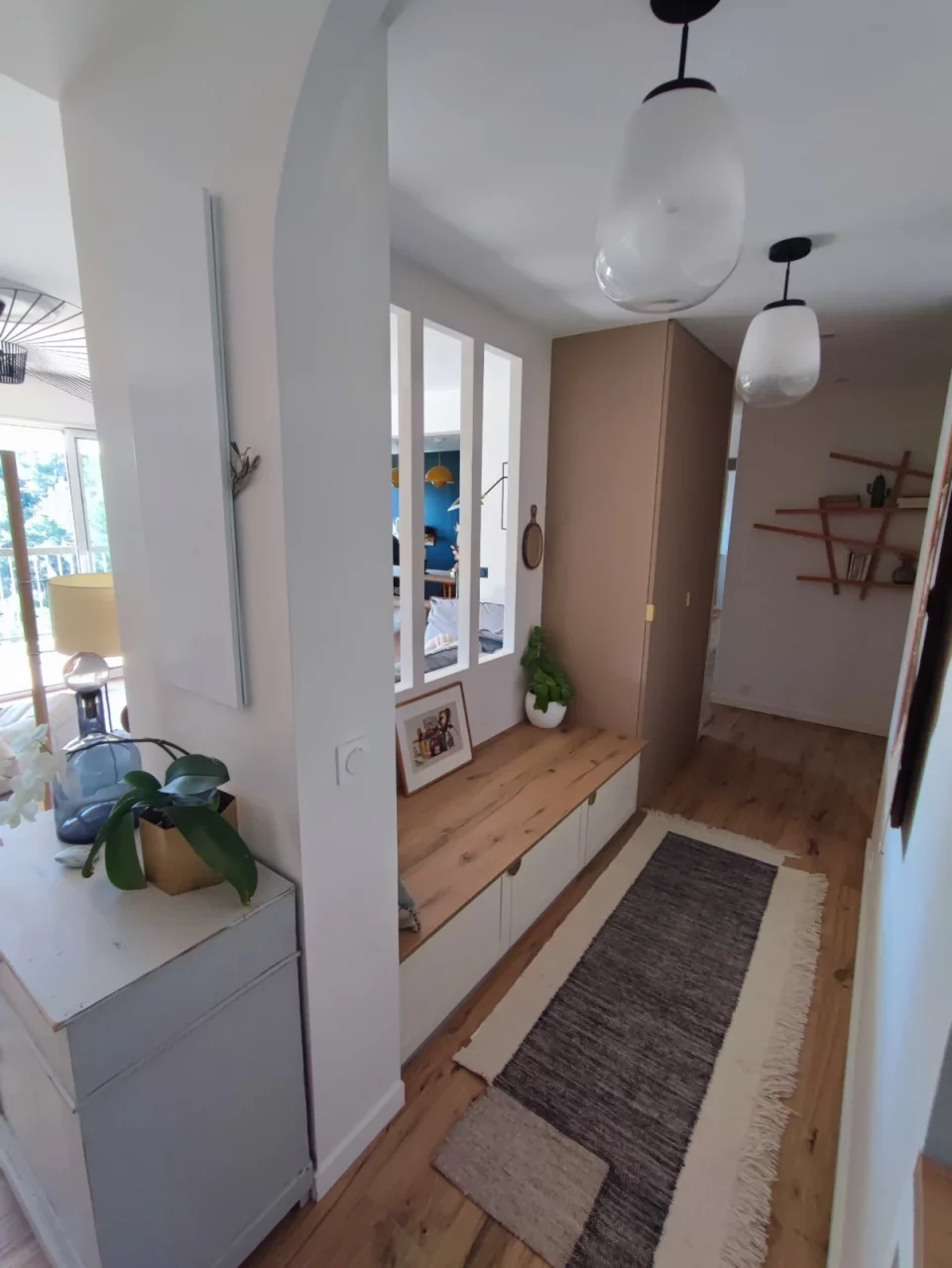
Small apartments gain scale through light and visual continuity. Satin finishes, light tones, and unified flooring extend the perception of volume. Simply painting the ceiling lighter than the walls gives an impression of height. Mirrors and interior glass partitions (verrières) extend natural light and open perspectives without losing privacy.
💡 Architecture Hack: Place a mirror facing a window or light source to double the perception of space. It’s a simple but spectacular effect.
Be careful of visual traps: multiplying dark shades or high-gloss coatings often creates the opposite effect. Lighting should be thought of as a separate plan, with indirect sources, ambient lighting, and well-distributed functional points.

5. Partitioning Without Closing: Separating Spaces Intelligently
Every project requires its own balance between openness and privacy. There is no universal solution: glass partitions, wood slats (claustra), curtains, or open shelving complement each other rather than oppose. The choice depends on the desired style, budget, and maintenance level. For instance, wood slats provide warmth but require regular dusting, while a glass partition involves glass maintenance.
📐 Professional Tip: Reversible separations are perfect for small spaces: they offer flexibility without requiring heavy construction work.
Curtains offer usage flexibility and can hide a guest sleeping area on demand, even if sound insulation remains limited. The key is to design each separation as an balancing tool: delimiting without enclosing, isolating without cutting the visual link. An optimized layout, as seen in our article dedicated to the primary suite, shows how fluid usage and zone separation are powerful levers for a small space.
6. Designing Smart and Modular Furniture
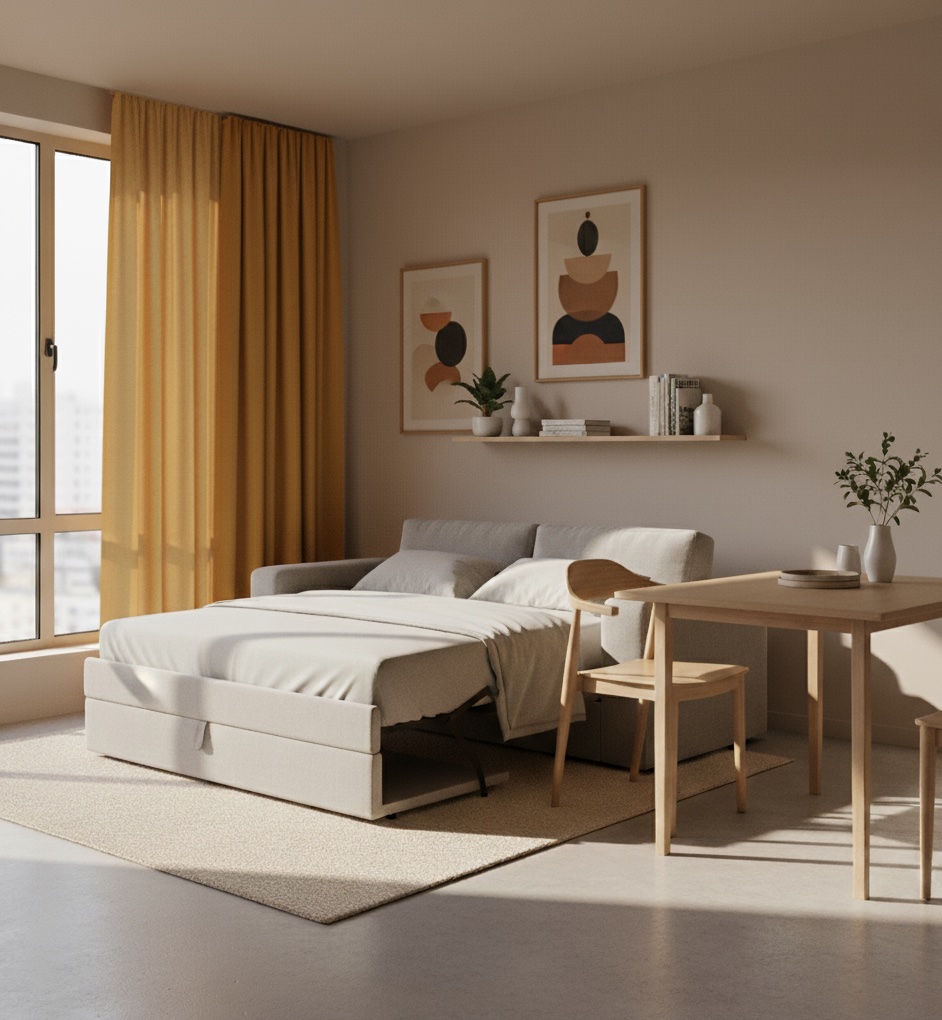
Modular furniture is one of the pillars of small space optimization. Every element must fulfill several functions while maintaining a light aesthetic. Folding tables, wall beds (murphy beds), or sofa beds are examples of design intended to move, transform, and hide away.
💡 Architecture Hack: A piece of furniture should be able to be moved or transformed without losing its visual balance. Agility is the key to sustainable fit-out.
7. Taking Advantage of Ceiling Height
Height is an often-underestimated asset. When it exceeds 2.60 m (8.5 feet), it becomes a true resource for gaining square meters of storage or creating a sleeping area. Low mezzanines or technical platforms allow for function separation without walls.
📐 Professional Tip: Before creating a mezzanine, always check the remaining free height under the ceiling. Below 1.90 m (6.2 feet), prefer high-level storage over a living space.
8. Playing with Perspectives and Contrasts
Visual effects directly influence the sensation of space. By working on visual axes and controlled contrasts, you can enlarge a room without moving the walls.
💡 Architecture Hack: Use a slightly darker shade on the far wall of a room to accentuate depth. This guides the eye and amplifies the perspective.
9. Thinking of the Lighting Plan as a Layout Tool
Lighting shapes volumes, enhances materials, and influences visual comfort. A good lighting plan combines three levels: soft general lighting, targeted functional lighting, and decorative lighting to highlight a detail or volume.
📐 Professional Tip: Multiply indirect light sources to create depth and adjust their intensity according to usage. The eye reads a nuanced space better than a uniformly lit one.
10. Hiring a Professional for a Custom Project
Optimizing a small apartment is not limited to simple hacks: it requires a global vision blending ergonomics, light, furniture, and circulation. A design or interior architecture professional brings that transversal gaze that anticipates real needs and avoids costly mistakes.
Their guidance allows for exploiting every corner, integrating technical constraints, and achieving a result that is both aesthetic and durable. Well-designed, a small space can offer as much comfort and personality as a large home: the difference lies simply in the precision of the drawing and the coherence of the project.
In Conclusion
Optimizing space in a small apartment means rethinking interior design as a whole: light, circulation, storage, and functional design. These optimization solutions, inspired by an interior designer’s perspective, transform compact spaces into pleasant, coherent, and personalized places.
With a bit of ingenuity and a few key principles, every square foot can reveal its potential. The tips in this guide remind us that a well-designed small home often offers more comfort than a poorly organized large space. To go further, explore our other advice dedicated to renovation, decoration, and bespoke design.


Optimizing Small Apartments: Architect Tips for Functional and Harmonious Design
How can I optimize the layout of a small apartment without losing comfort?
Optimization relies on analyzing volumes and prioritizing usage. A well-thought-out floor plan defines traffic flows, seating, and storage areas. The goal is to combine fluidity, ergonomics, and thermal comfort without sacrificing aesthetics.
What are the best interior design hacks to save space?
Plan for integrated storage within partitions, under-sloped ceilings, or multifunctional furniture. Combining several uses into a single element helps limit visual clutter. Bespoke or custom-made solutions are the most effective for small surface areas.
How can I create discrete and integrated storage in a studio or one-bedroom apartment?
Full-height storage units exploit the room’s volume without weighing it down. Opt for flat, tone-on-tone fronts to maintain visual continuity. Retractable modules, niches, or technical platforms allow for hidden storage without losing accessibility.
What colors and lighting should I choose to visually expand a small space?
Light shades diffuse light and expand volumes, especially with matte or satin finishes. LED strips or wall sconces provide soft indirect light. Mirrors, placed opposite windows, double the perception of space.
How can I separate spaces without walls in a small apartment?
Openwork screens (claustras), glass partitions, or half-walls create light transitions. The key is to maintain sightlines and airflow. Visual zoning can also be achieved through material contrasts or changes in floor coverings.
What type of modular furniture is best for optimal space saving?
Choose dual-function furniture: wall beds (murphy beds), extendable tables, or benches with built-in storage. Furniture on casters facilitates the transformation of spaces. Each room must maintain a minimum circulation clearance of 60 to 70 cm around modules.
How can I use ceiling height to create storage or a mezzanine?
With a height of 2.60 m or more, you can consider high storage units or technical flooring. Lightweight steel or wood structures multiply uses (sleeping area, office, storage). Always check the floor’s load-bearing capacity before installation.
How do I design a lighting plan suitable for a small apartment?
Effective lighting relies on three levels: general, accent, and ambient. Recessed spotlights, LED strips under cabinets, and accent lamps structure the volumes. The goal is to create light gradients to visually enlarge the space.
Why hire an architect to design a small home?
An interior architect anticipates technical, electrical, and structural constraints. Their expertise guarantees coherence between comfort, aesthetics, and building standards. They provide a global plan that avoids proportion errors or unnecessary volume loss.
What mistakes should I avoid when renovating or furnishing a small apartment?
Avoid dark colors, bulky furniture, and solid partitions that block light. Do not neglect height, which is often under-utilized. Finally, always provide proper ventilation and lighting to maintain comfort and durability.