Mastering the Design of Your Custom Walk-in Closet
We all dream of having that perfect W A L K – I N C L O S E T! To avoid storing your sweaters in your oven like Carrie Bradshaw in Sex and The City, follow our architect’s advice to master the art of closet design. To go even further in organizing your home, discover our 10 architectural tips for optimizing space.
Definition: What Exactly is a True Dressing Space?
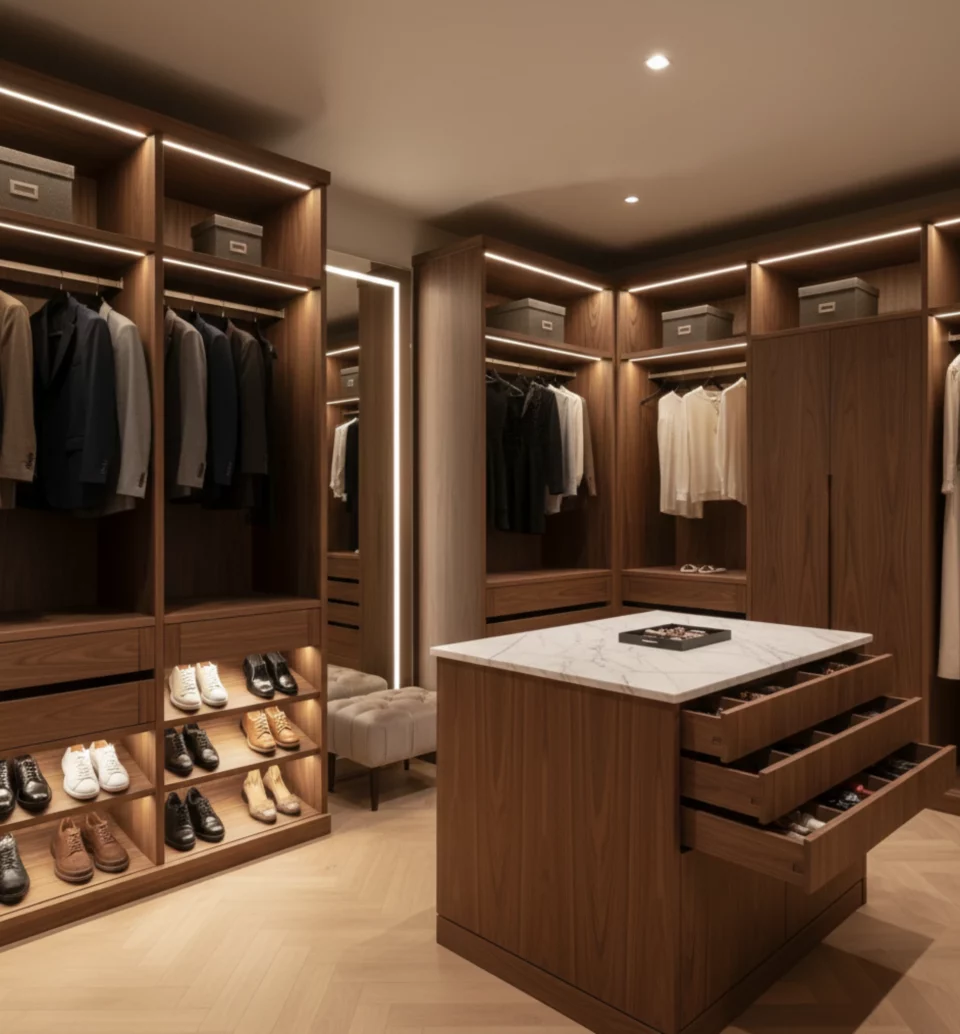
It is far more than just a wardrobe; it is an area dedicated entirely to its function. The hallmark of a well-designed dressing room is creating an environment not just for your clothes, but for getting ready in a serene setting. This can include features like a vanity area, a central island, or a comfortable ottoman.
These storage zones are now an essential part of modern interiors. They are primarily found in the creation of a complete primary suite to significantly increase your property value.
Closet Design: The Advantages of Bespoke Solutions
Custom-made (bespoke) is the ultimate technical response to your home’s unique constraints. Unlike flat-pack solutions, custom furniture adapts to uneven walls and optimizes every single inch up to the ceiling.
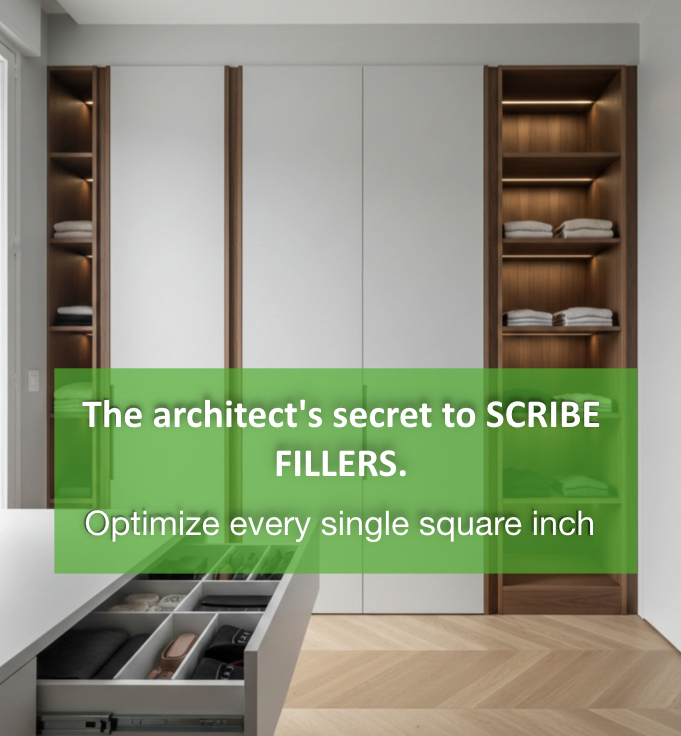
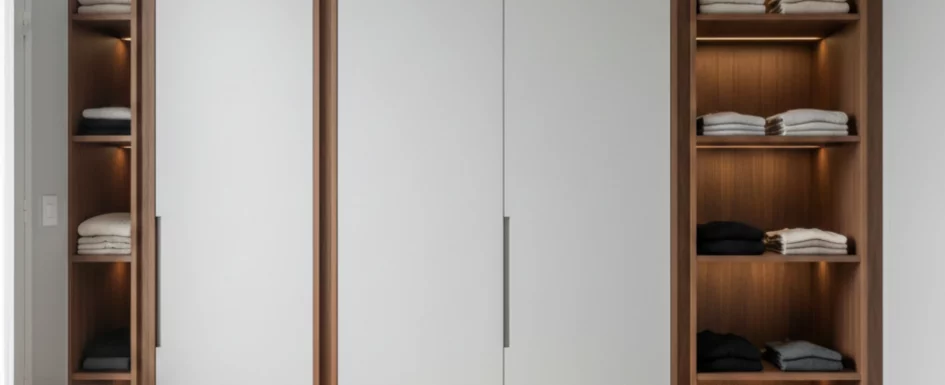
Architect’s Tip: In renovation projects, always plan for a safety margin during layout. Using scribe fillers (finishing strips) allows you to compensate for out-of-square walls or bypass bulky baseboards. This technical detail ensures a professional and durable finish.
Which Materials Should You Choose for a Durable Closet?
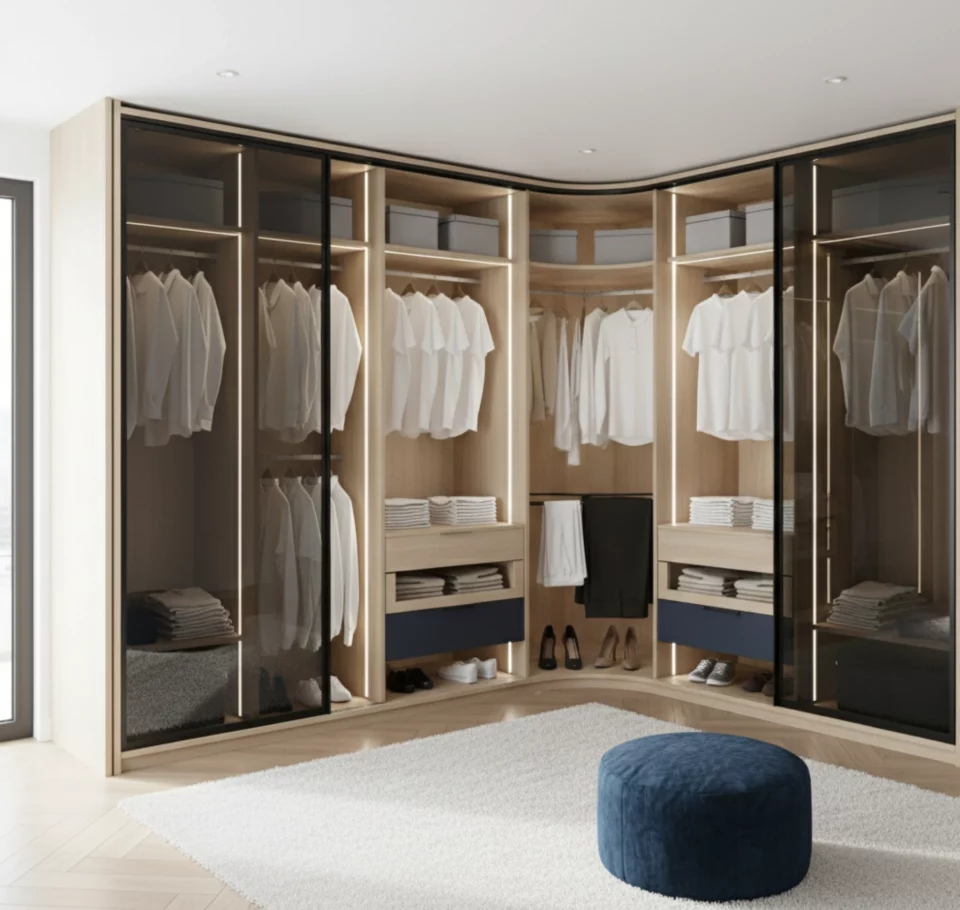
Smart design lies in balancing materials. High-density melamine is ideal for interior structures (carcasses) as it offers optimal scratch resistance. For visible parts, such as decorative gables or front panels, we prefer noble wood veneers or lacquered MDF. This hybrid approach focuses your budget on the visible aesthetics.
How to Guarantee a Beautiful AND Functional Result?
In renovations, surfaces are never perfectly straight. The key to a high-end walk-in closet is accepting the loss of a few millimeters to integrate compensation elements. Finally, lighting with motion sensors and integrated spots enhances materials while providing essential daily comfort in a modern wardrobe.
Materials and Lighting to Enhance Your Storage Space
It is strategic to keep high-quality materials for areas exposed to the eye. This is the core essence of a successful custom closet furniture project. Targeted lighting completes the experience by highlighting your favorite accessories and pieces.
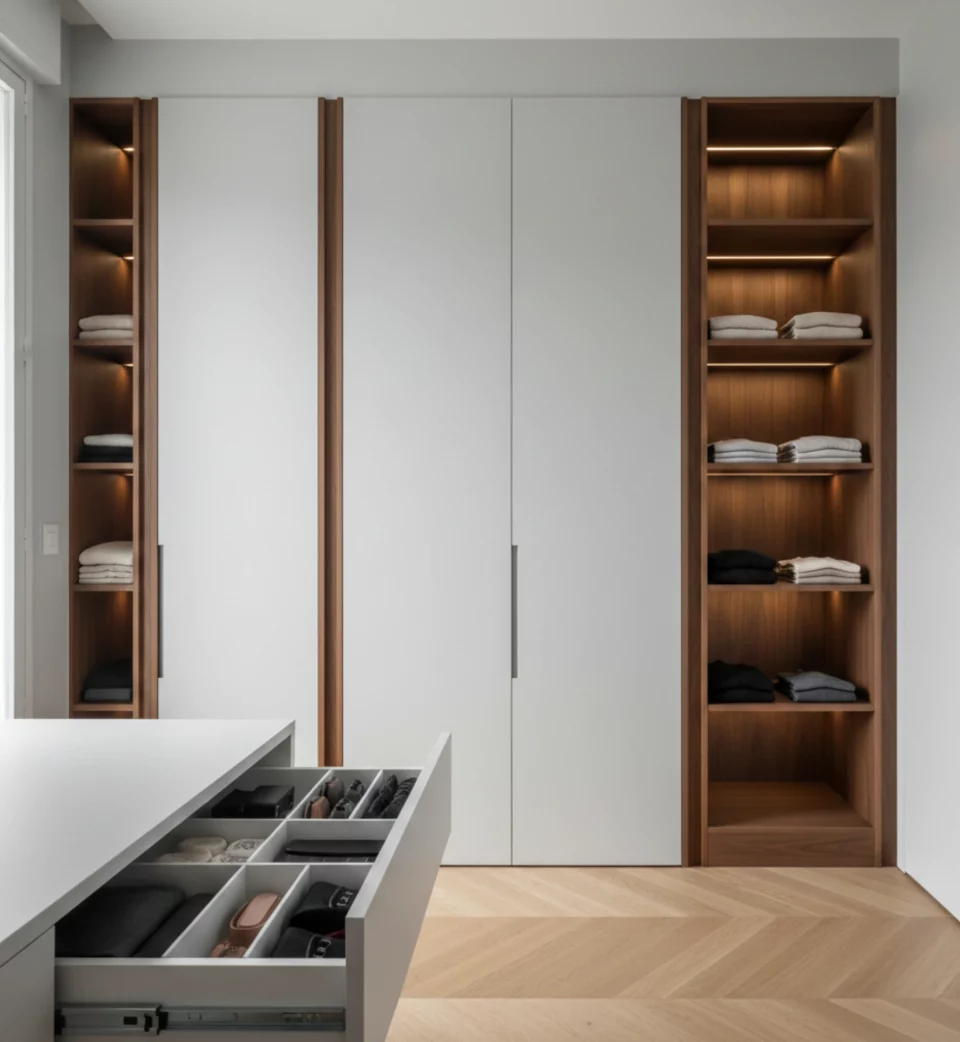
The Space-Saving Closet: An Architectural Solution
Whether hidden behind a pocket door or showcased as a centerpiece, the dressing room must assert your decor’s character. Integrating full-height mirrors visually expands the room while providing the necessary functionality for dressing.
Conclusion: Succeeding in Your Dressing Room Project
A successful layout means reconciling aesthetics with technical constraints. To meet our goals: materials make the difference through a smart mix (melamine interior / noble wood exterior). A beautiful and durable closet relies above all on rigorous planning that anticipates the irregularities of the building.
Follow the Archiworking YouTube channel for more tips on your home layouts and renovation projects!