
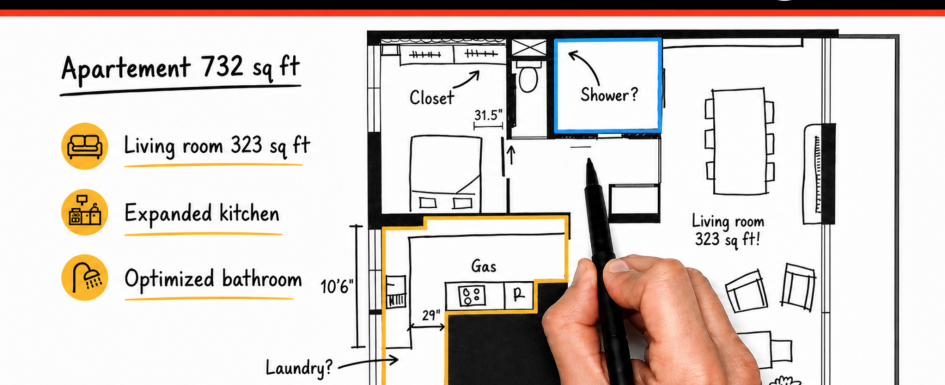
A 732 sq ft apartment for a retired couple. Three spaces too small, over-partitioned and under-used. The goal: expand the kitchen, merge the bathroom with the adjacent closet and create a large open living area, all without any extension or load-bearing wall work. Here is how we completely redesigned the floor plan, from the initial assessment to the final result.
By Clara AJMAR, Certified Interior Architect & Landscape Designer DPLG (updated June 2026)
732 sq ft. Three spaces expanded. No extension. A completely redesigned floor plan.
1. Pre-construction assessment of a real case: how to read a 732 sq ft floor plan
2. How to create a 323 sq ft living space by removing non-load-bearing walls
3. How to repurpose a 28 sq ft loggia to create a 114 sq ft kitchen with laundry
4. How to expand a 43 sq ft bathroom to 65 sq ft by reclaiming an adjacent closet
5. How to optimize a couple’s bedroom with sliding door, soundproofing and full-length closet
6. Before and after: a 732 sq ft apartment restructured without extension
7. Frequently asked questions
Clara and Mathieu walk through the complete floor plan, the key decisions and each phase of the project in this video.
Pre-construction assessment of a real case: how to read a 732 sq ft apartment floor plan to identify real potential
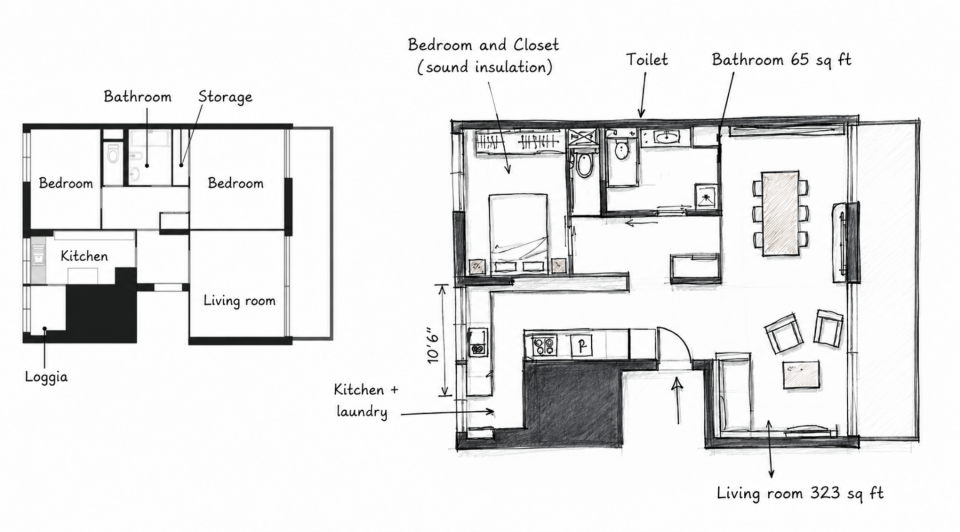
The original apartment is a 732 sq ft unit in a multi-unit building. The entrance opens onto a 168 sq ft living area on the right, with an adjacent bedroom. On the other side of the entrance, an 86 sq ft kitchen and a 28 sq ft loggia. Further in, a hallway leads to a second bedroom, a bathroom with technical riser, a 22 sq ft closet and a 43 sq ft bathroom. The space is fragmented: each room exists but none makes the most of the overall potential.
Reading the existing floor plan reveals three key levers. The loggia, directly adjacent to the kitchen, can be absorbed to create a more generous cooking space. The closet next to the bathroom adds 22 sq ft without major plumbing relocation. And the partitions between the entrance, living area and adjacent bedroom are non-load-bearing: removing them creates a large, open living space. This initial reading drives the entire design strategy. For a detailed look at what to verify before starting work in an apartment building, our article on converting a kitchen into a master suite floor plan covers the key planning steps.
How to create a 323 sq ft living space by removing non-load-bearing walls in an apartment building
The existing 168 sq ft living area is adjacent to a bedroom the owners no longer need as a separate room. By removing all the partition walls between these two spaces, a unified volume of just over 323 sq ft is created, open onto the glazed doors and the exterior terrace. The front door is reversed into a pocket to open directly onto the living space rather than the kitchen. Behind the door, an off-the-shelf unit provides a small entry closet with shoe storage, with no additional partitioning required.
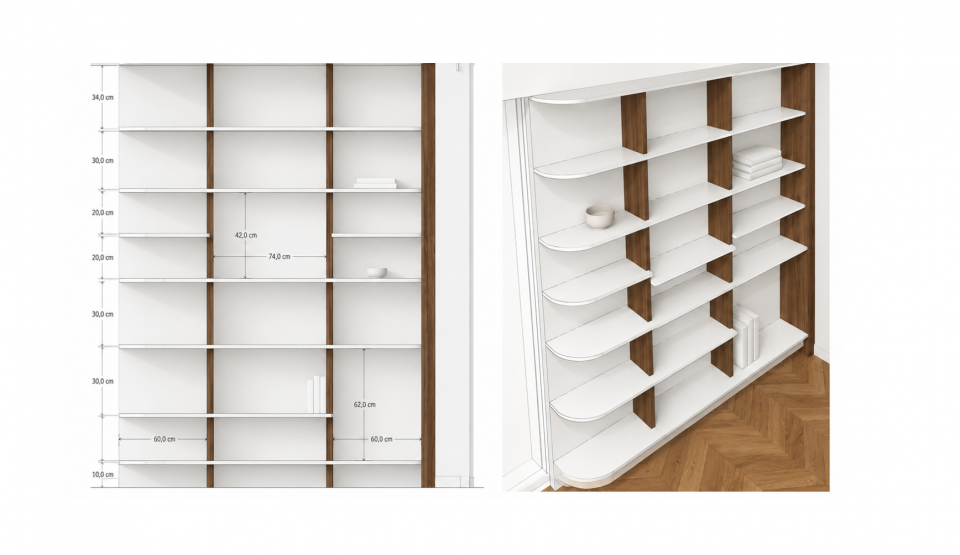
In this large space, a rounded corner bookcase creates a soft visual separation between the lounge and dining areas without adding walls. A linear bookcase along the back wall completes the storage. The result accommodates a sofa, TV area, armchairs and a large dining table, all within a fluid, well-lit volume with daylight on both sides.
Before removing a partition wall in an apartment building, always verify whether it is load-bearing using the structural drawings, and confirm it is not a shared element under the building regulations. A non-load-bearing wall may still require a declaration if it affects the overall layout of the unit or the building’s exterior appearance. This is worth checking with the building manager and the relevant regulations before any demolition work begins.
How to repurpose a 28 sq ft loggia to expand the kitchen and create a 114 sq ft space with laundry area
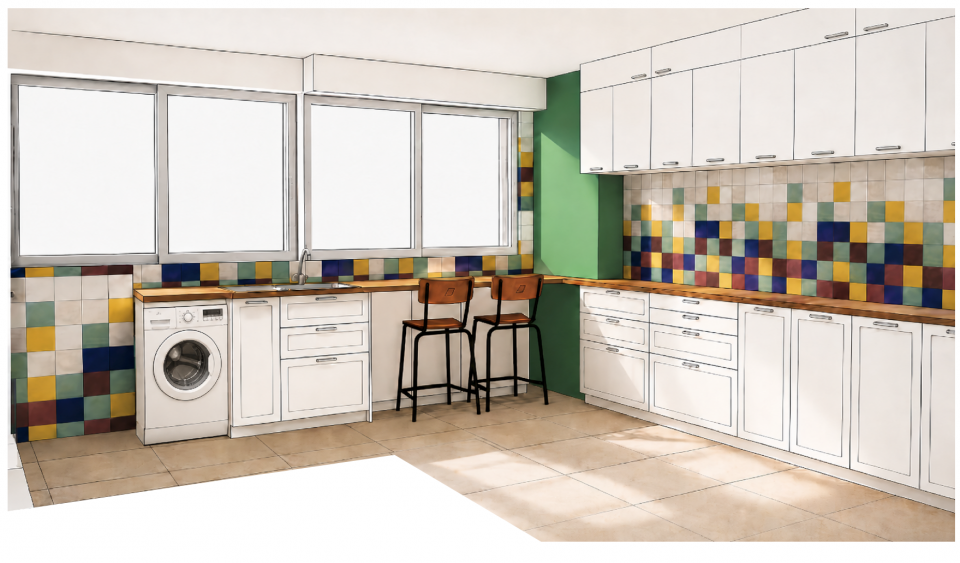
The 86 sq ft kitchen and the 28 sq ft loggia are separated by a partition wall. By removing this partition and part of the adjoining wall to align the run evenly, a single 114 sq ft volume is created. The kitchen is reorganized into two runs: a shallow 16-inch-deep storage run on one side, and a full-depth counter run of approximately 10.5 ft on the other, including the sink facing the window, the gas hob with oven below and the refrigerator. A 29-inch clearance between the two runs allows comfortable circulation.
The loggia naturally accommodates the washing machine as a discreet laundry area at the back of the kitchen. Under-window shelving maximizes storage across the full width of the space. The existing riser is retained and boxed in cleanly to meet building regulations while becoming a structural feature of the kitchen design. For similar kitchen transformation projects, our article on primary suite design layout ideas and expert tips covers related planning principles.
How to expand a 43 sq ft bathroom to 65 sq ft by reclaiming an adjacent closet without load-bearing walls
The existing bathroom is 43 sq ft. A 22 sq ft closet sits directly adjacent. By removing the partition between them, the return wall and the door, a unified 65 sq ft volume is created. A pocket door replaces the swing door to preserve every inch of circulation. At the far end, a frame with a fixed glass panel brings natural light into the new space. The bathroom accommodates a large 55 x 35 in shower, a slightly offset double vanity with storage units on both sides. For more on expanding a small bathroom without structural work, our article on 270 sqft basement master suite with closet, bathroom and home office explores similar floor plan strategies.
The video below shows the complete bathroom renovation from plan to finished installation. This is the exact bathroom from this apartment, explained step by step.
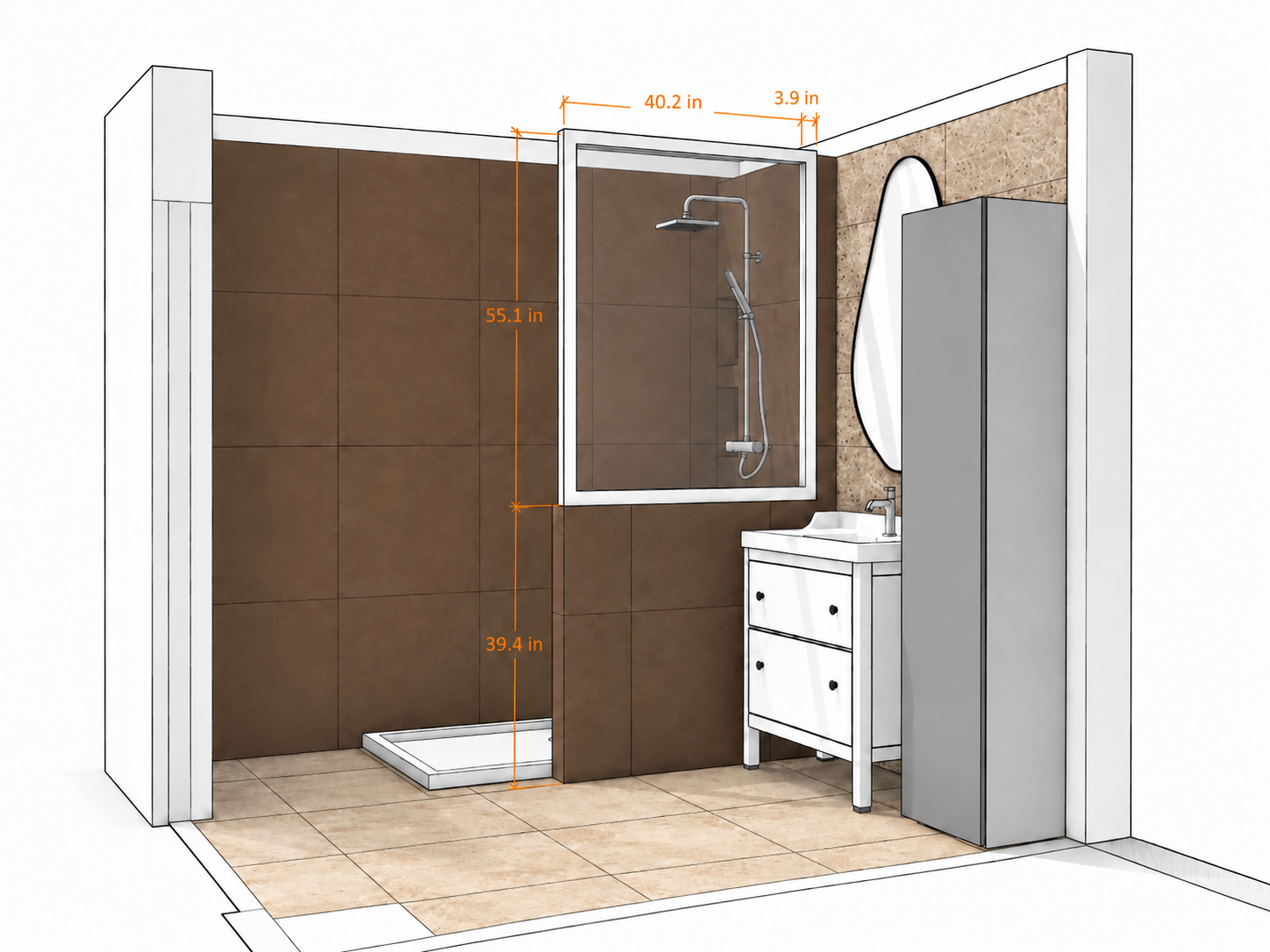
In this type of bathroom-plus-closet merger, the most critical decision is the pocket door placement. It must be drawn on the floor plan before any demolition to ensure the available wall thickness is sufficient and that no utility chase interferes with the sliding mechanism. This single detail determines the success of the entire operation.
Our article on 270 sqft basement master suite with closet, bathroom and home office covers related floor plan work in detail.
How to optimize a couple’s bedroom with sliding door, soundproofing and full-length closet
The existing bedroom is kept at its current size but completely rethought in terms of layout and finishes. The swing door is replaced by a sliding door to free up the passage and eliminate the swing arc in a room where every inch matters. Adapted drywall is installed along the full length of the shared wall with the neighboring unit to improve sound insulation. A built-in closet for both occupants runs along the remaining wall, with a row of under-window shelving to maximize available storage. The room’s existing recess allows the bed to be positioned with adequate clearance on both sides.
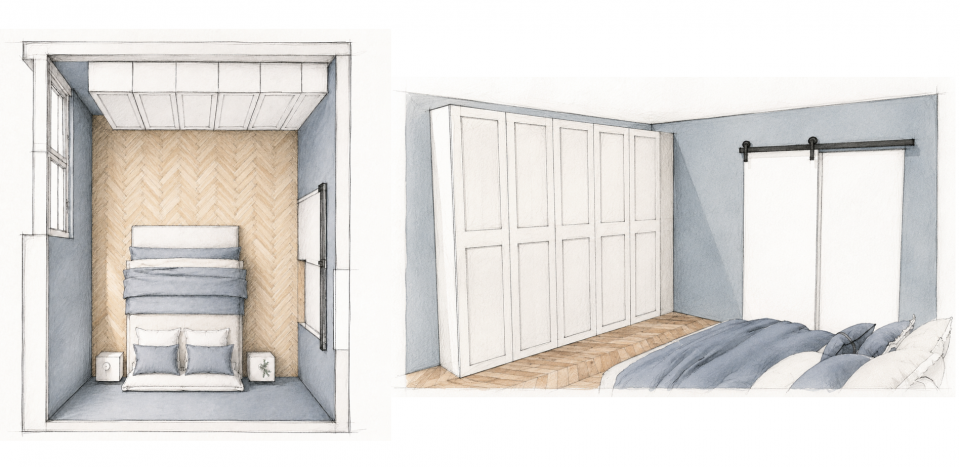
Before and after: a 732 sq ft apartment restructured without extension for a retired couple
The result comes down to three figures. The living space reaches 325 sq ft, comfortable and well-lit on both sides. The bathroom goes from 43 sq ft to 65 sq ft by merging with the adjacent closet. The kitchen with the integrated loggia reaches 114 sq ft with a built-in laundry area. Three spaces expanded, one apartment completely rethought, without any extension or load-bearing wall work. The project responds precisely to the couple’s needs: a generous living area for entertaining, a spacious bathroom and a functional kitchen with ample storage. Find all our interior design projects on the ArchiWorking YouTube channel.
A floor plan is never designed in isolation from site constraints. On this project, two technical factors directly shaped the design decisions. First, the presence of a collective underfloor heating system made it impossible to fix anything to the floor: all partitions and wall lining had to be designed as suspended drywall independent of the floor slab, which means finished wall thicknesses must be accounted for in the plan from the very first sketch. Second, because the apartment is on the top floor, replacing the exterior windows required a freight elevator coordinated with the joinery contractor, a logistical constraint that must be factored into the schedule and budget well before work begins. Any homeowner renovating a top-floor unit or dealing with in-floor heating systems should address both points at the design stage, not on site.
Working on a similar project? Explore all our floor plan studies on the ArchiWorking channel.
Clara AJMAR


Frequently asked questions about optimizing an apartment without extension
Can you remove non-load-bearing walls in an apartment building without approval?
Non-load-bearing partitions can generally be removed without formal approval, but this always needs to be verified against the building’s specific regulations, the HOA or building management rules, and the exact nature of the work planned: each building has different requirements. Notifying the building manager before work starts is always recommended. An interior architect or project manager can confirm whether a wall is load-bearing and guide the approval process.
How do you expand a bathroom without extension by reclaiming an adjacent closet?
The method involves removing the partition between the bathroom and the adjacent closet, replacing the swing door with a pocket door to free up circulation, and redistributing the fixtures across the new unified volume. On this project, 22 sq ft of closet space allowed the bathroom to grow from 43 sq ft to 65 sq ft, large enough for a 55 x 35 in shower and a double vanity.
What is the minimum size for a bathroom with a 55 x 35 in shower and double vanity?
65 to 70 sq ft is the comfortable minimum for combining a 55 x 35 in shower, a double vanity and adequate circulation space. Below 55 sq ft, compromises are necessary: either a smaller shower or a single vanity. The position of the plumbing riser is the key factor: it determines where the shower can go and how far the drain runs horizontally.
How do you repurpose a loggia adjacent to a kitchen without blocking natural ventilation?
Absorbing a loggia into the kitchen requires checking the building regulations and local planning rules. Natural kitchen ventilation must be maintained or compensated, either through the new windows or a properly sized mechanical ventilation system. If the loggia faces a shared facade, a building engineer should review the plans before work begins.
How do you box in shared heating pipes while keeping maintenance access?
The boxing must include an access hatch large enough for a maintenance technician to work. The top section can be made removable without exposed fixings for a clean finish. This requirement is typically specified in the building regulations and must be respected even for work carried out within a private unit.
Can you fit a laundry area in a kitchen smaller than 130 sq ft?
Yes, as long as the washing machine position is planned into the kitchen layout from the start. The machine fits into a recess or at the end of a run, with drainage connected to the nearest stack. On this project, the integrated loggia naturally creates a discreet laundry zone at the back of the kitchen without reducing the main work surface.
How do you optimize a 732 sq ft apartment for a couple with no children at home?
The design priorities shift compared to a family home: a bedroom can become an extension of the living area, the bathroom can be made more generous rather than multiplying toilet rooms, and the kitchen can be expanded with laundry integration. The focus moves to daily comfort and the ability to entertain. On this project, the three key moves, 323 sq ft living area, 114 sq ft kitchen, 65 sq ft bathroom, answer exactly that programme.
Does inverting a front door require HOA or building approval?
Reversing a front door into a pocket sleeve within the private unit generally does not require formal approval. However, this remains to be verified against the building regulations, the HOA or building manager, and the exact scope of work: if the modification affects the shared structure or the common hallway appearance, prior approval may be required.
What budget should you plan for a full renovation of a 732 sq ft apartment with new kitchen, bathroom, flooring, paint, partial electrical and new windows?
For a complete renovation of this scope in France (new kitchen, full bathroom redo, floor replacement, full repaint, partial electrical update and new exterior windows), a realistic budget range is €55,000 to €75,000. This is indicative and will vary significantly based on location, finish quality, project timing and the budget allocated to kitchen and bathroom fixtures, which alone can represent €15,000 to €25,000. A well-scoped project with an interior architect or project manager from the outset helps keep costs on track and avoid on-site surprises.